Sunday, May 23, 2010

How much faith can you put in a kayak?


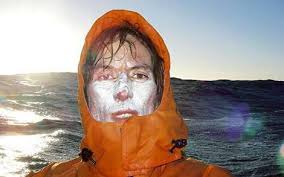
On 11 January, 2007, Andrew McAuley set off to paddle a kayak solo across the Tasman Sea from Australia to New Zealand. It was a long and dangerous stretch of water, with frequent severe storms. McAuley, a highly-experienced kayaker, entrusted his life to one small kayak and his own physical fitness and skill.
Sadly, he didn't make it. On 12 February his empty kayak was found just 30 nautical miles from the coast of New Zealand. His body was never found. McAuley had placed enormous faith in his little kayak and his own ability. But his kayak, or his own skills – or both – let him down.
Around the same time, another young man set out from Australia to traverse the Tasman Sea to New Zealand—my son, David Thurlow.
There were two critical differences between the journeys however – the first difference was that Dave didn't paddle a kayak. He flew on a commercial jet. The second difference was that he arrived safely in New Zealand.
Dave didn't entrust his life to a flimsy kayak, nor did he put any faith in his own fitness or skill. He just sat on the plane and was carried across the ocean by the experts.
So who showed the most faith in their means of transport? I would suggest that it takes a lot more faith to rely on a kayak to cross an ocean than a commercial plane.
Yet it was not the one who showed the most faith who made it to New Zealand. Rather, it was the one who showed faith in the most reliable means of transport.
That's the thing about faith – it's not how much faith you have that counts, but rather what you put your faith in. To borrow from the words of Jesus, it doesn't matter if your faith is the size of a mustard seed, as long as the thing you put your faith in is going to get you where you want to go.
In the same way, it's not our faith that gets us to Heaven, but the Saviour in whom we put our faith. Exercising faith can be as passive as sitting on an aeroplane. But if it's a reliable plane, we'll reach our destination.

Sunday, May 16, 2010

What if God was infinitely powerful, but lacked wisdom and love?


In a recent Bible talk we learned that God's glory is "God's infinite worth made manifest." God is, for example, infinitely powerful, infinitely loving, and infinitely wise. And when we acknowledge these infinite attributes in our own lives, and declare them to others, we give him the glory that is due to his name.
But can you imagine what life would be like if God was infinitely powerful, but lacking in love and wisdom? What if for just one, brief moment, God's love turned to hate, and he decided to destroy all he had created, and break his promise to save those who turn to Christ? We would all be lost, without any hope!
Or perhaps if God was infinitely powerful, and infinitely loving, but didn't have the infinite wisdom needed to properly use that power and love? In the movie "Bruce Almighty", Bruce (Jim Carrey) is given God's infinite power for a short time, but clearly doesn't have the infinite love or wisdom of God.
Among other disastrous feats of power, Bruce attempts to romance his wife one evening by pulling the full moon closer to the earth, so that it appears bigger. This act demonstrates Bruce's great power, shallow love, and total lack of wisdom, as tidal floods (resulting from the moon being too close to earth) devastate coastlines around the world.
Alternatively, imagine a God who is infinitely loving and wise, but doesn't have the power he needs to put his wisdom or love into effect. How could we be sure such a God would have the resources he needs to be able to save us? He might have the wisdom to know what is needed to save us, but not the power he needs to carry it out.
But thanks be to God for his infinite power, love and wisdom.
For us who belong to Christ that means absolute security. God not only wants what is best for us because he is infinitely loving, he also knows what is best for us because he is infinitely wise, and is able to do what is best for us because he is infinitely powerful.
Praise be to God for his infinite worth!
"And we know that in all things God works for the good of those who love him, who have been called according to his purpose... What, then, shall we say in response to this? If God is for us, who can be against us? He who did not spare his own Son, but gave him up for us all—how will he not also, along with him, graciously give us all things?" (Romans 8:28, 31, 32)

Sunday, May 9, 2010

How much credit should a baby get for being born?

Almost three weeks ago, our grandson Elliott was born.
When Jacky and I gave our daughter Carolyn a card to congratulate her, I commented that I had wanted to include on the card some kind of congratulations for young Elliott – but both Carolyn and Jacky felt that was unnecessary. "After all", said Carolyn, "Elliott didn't do anything worthy of congratulation – he was just born, I did all the hard work!"
What's true in the physical realm is often also true in the spiritual realm. A person who is born again as a Christian contributes nothing to his or her own spiritual birth. They are accepted by God as one of his children simply because they are born into His family. God does all the work, and God gets all the glory – no credit is due to the newborn Christian, just as none is due to the newborn baby.
But after a person has become a member of God's family and grows towards maturity, there are expectations. There is work to be done and responsibilities to be met, just as in any family.
There is most definitely a place for good works in the life of the Christian. But there is a difference between works done because we are saved, and works done in order to be saved.
Concerning works done in order to be saved, Paul says in Ephesians 2:8,9:
" For by grace you have been saved through faith; and that not of yourselves, it is the gift of God; not as a result of works, so that no one may boast."
But concerning works done as an expression and outworking salvation grace faithof one who has been saved, Paul says in Philippians 2:12-15:
"Work out your salvation with fear and trembling; for it is God who is at work in you, both to will and to work for His good pleasure. Do all things... so that you will prove yourselves to be blameless and innocent, children of God..." (NASB)
OK, so I guess I can't give little Elliott credit for being born into our family. But when he grows to maturity as a family member, Jacky and I (and of course his parents) will expect him to work hard at living a life that reflects the standards and morals of the family to which he belongs!
And as he reaches the important milestones in his life, I know I will delight to give him a card with the words "Congratulations Elliott!" Written on it.